Branding Isn't Marketing
BRANDING ISN'T THE LAST THING YOU FIGURE OUT. IT'S THE FOUNDATION EVERYTHING ELSE IS BUILT ON.
Think about the last brand that made you feel something special. Not because of a logo. Not because of an ad. Because of how it made you feel every single time you encountered it — the product, the unboxing experience with packaging, the way someone answered when you called, the values it stood behind without being asked.
That feeling didn't happen by accident. And it wasn't manufactured by a single marketing campaign or social media followership.
WHAT BRANDING ACTUALLY IS
There's a version of branding that most businesses are familiar with: the visual identity, the tagline, the brand guidelines PDF that lives in a shared drive and gets referenced once a quarter. That's not branding. That's the output of branding, and there's a meaningful difference.
Real branding starts with a much harder question: What is the one thing this business exists to do? Not what it sells. Not what category it competes in. Why it exists, and what it genuinely stands for when no one's watching and there's no campaign brief driving the answer.
When you can answer that question clearly and honestly, something shifts. Decisions that used to require a boardroom conversation start to make themselves. Your product roadmap has a filter. Your hiring criteria have a filter. Your communications, your partnerships, your pricing, your customer service scripts — all of it runs through the same underlying logic. The brand becomes less of a marketing artifact and more of an operating system.
WHAT THIS LOOKS LIKE IN PRACTICE
Patagonia is the most honest illustration of this I can point to, not because they're a perfect company, but because the clarity of their purpose is visible in every business decision they've made, including the commercially inconvenient ones.
Their stated mission, "We're in business to save our home planet," isn't a tagline. It's a constraint. It's why they ran a Black Friday ad telling customers not to buy their jacket unless they needed it. It's why they repair gear instead of just selling new gear. It's why, in 2022, founder Yvon Chouinard transferred ownership of the entire company to a trust and nonprofit structure designed to funnel profits into environmental causes. That wasn't a PR stunt. It was the logical conclusion of a brand that actually meant what it said.
The business outcome? Patagonia consistently commands premium pricing in a commoditised outdoor apparel market. Their customer retention is exceptional. They attract employees who are aligned with the mission before they walk in the door. They've built something that's structurally difficult to replicate, not because of a product feature or a media budget, but because of the coherence between what they say and what they do.
That coherence is the brand.
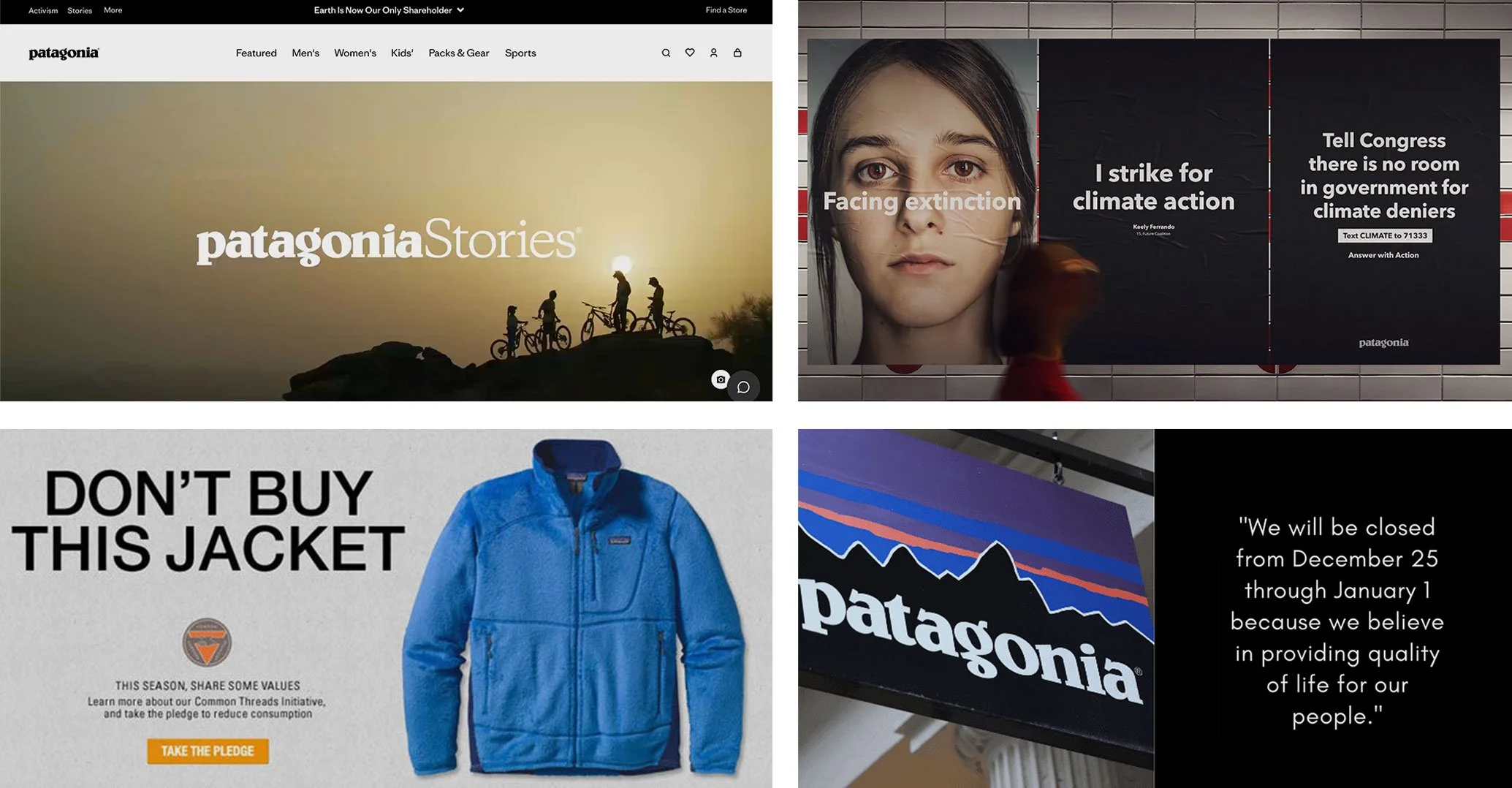
Images courtesy of Patagonia
Too Good To Go is a different kind of proof point, and a useful one, because their purpose doesn't just shape how the company operates internally. It actively shapes the industry around them.
Founded in Copenhagen in 2015, the company's mission is clear: create a world where food produced is food consumed. Their app connects consumers with surplus food from restaurants, bakeries, and supermarkets at a fraction of retail price. That model alone would be a viable business. But Too Good To Go treated their purpose as a mandate that extended well beyond the app.
When they identified that a significant portion of household food waste was driven by consumer confusion around "best before" date labels, they didn't run a social campaign and move on. They launched a global initiative called Look-Smell-Taste, bringing together major food producers across multiple markets to physically change the labelling on food packaging — now active in 14 countries with over 530 participating brands. They lobbied EU institutions on food waste policy and worked with 41 elected mayors in France to enforce a municipal charter against food waste. None of that is app functionality. None of it drives a direct transaction. It is a brand acting on its stated reason for existing, even when the return is indirect and long-term.
CEO Mette Lykke has been direct about the trade-off: "If we really wanted to, we could go more hardcore for profitability. But it's not really why we're here." That kind of statement either rings hollow or lands with authority, and which one it is depends entirely on whether the company's actions back it up. In Too Good To Go's case, they do. The result is a brand that has grown to over 100 million users without relying on discounting as its primary value proposition, because the value proposition was never the discount. It was the mission.
That coherence is the brand.
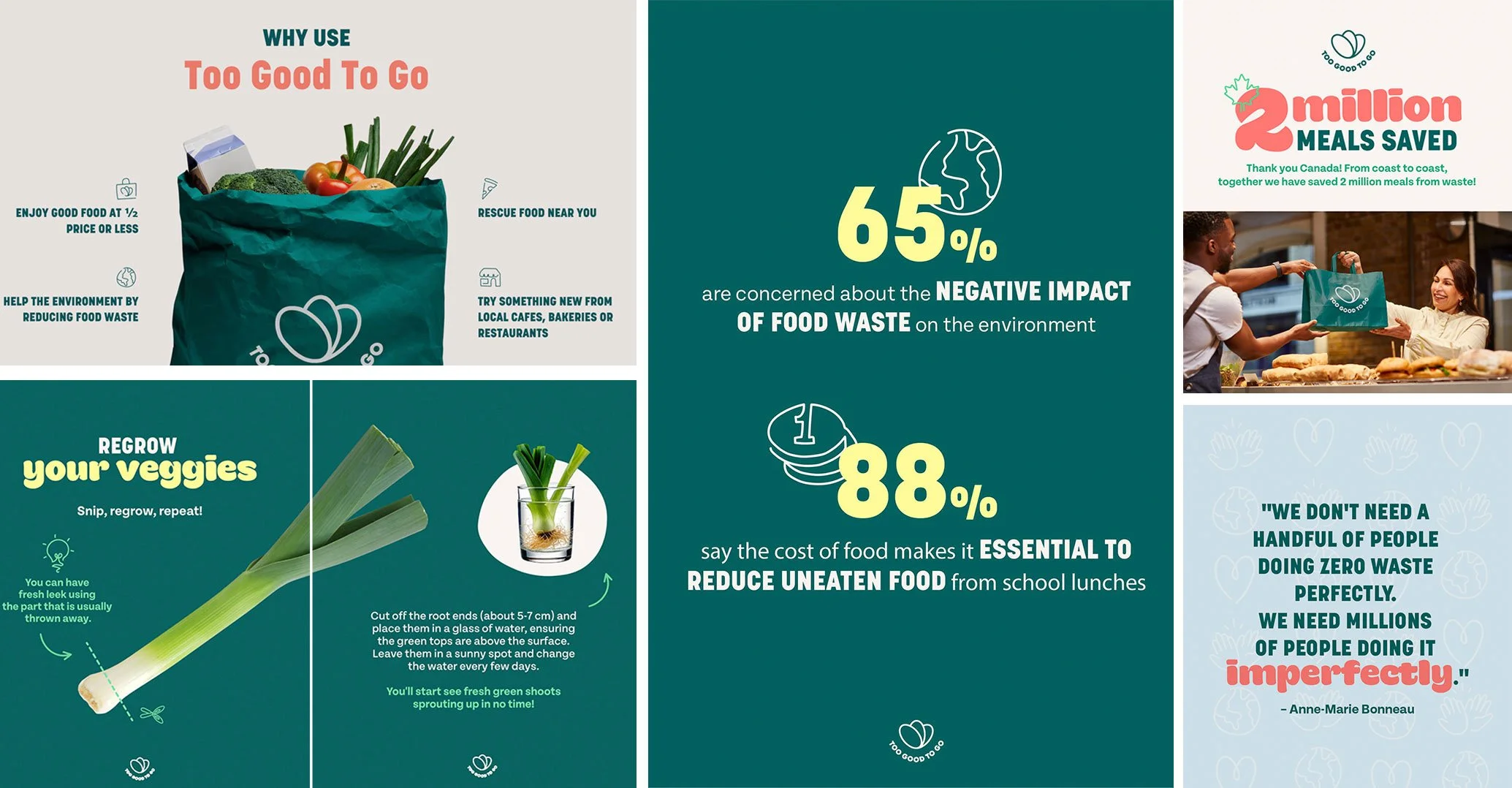
Images courtesy of Too Good To Go
WHY MOST BRANDS SKIP THIS
The honest answer is that it's uncomfortable work. Defining what your business truly stands for, and being willing to let that definition have real consequences, requires a level of conviction that's much harder than picking brand colours or writing a mission statement that sounds good in the lobby.
It's also slower. There's no immediate deliverable. You can't post it, pitch it, put it in a deck, or include it in your performance review in the following month. In a culture that rewards visible output and short feedback loops, the foundational work of brand strategy is easy to defer.
So most businesses default to the executional layer. They go straight to the logo, the campaign, the content calendar, and the paid media plan. They build the house before they've poured the foundation, and then they're genuinely puzzled when growth feels like pushing in every direction at once with no traction in any of them. The marketing works in isolation. The content performs. The ads generate clicks. But nothing compounds. Nothing sticks. Because there's no coherent centre for any of it to orbit.
THE BUSINESS CASE FOR STARTING HERE
Brand clarity isn't a soft outcome. It has measurable downstream effects that show up in real business metrics.
When customers understand what you stand for, the right ones find you, and the wrong ones self-select out. That's not just a brand benefit; it reduces customer acquisition cost, improves retention, and cuts down on the friction that comes from serving customers who were never the right fit. When your team understands the brand's purpose at an operational level, alignment costs go down. Less deliberation on decisions that should be automatic. Less inconsistency in how the company shows up across touchpoints. When the brand has a clear point of view, content and communications have something real to say, which is the actual reason thought leadership works when it works.
None of that comes from a brand campaign. It comes from the clarity that a brand campaign is supposed to express if the foundational work has been done first.
WHERE TO ACTUALLY START
The work isn't complicated, but it is demanding and requires real commitment. It means asking questions that don't have comfortable answers and being willing to sit with the tension until you find the honest ones.
What would be lost if this business disappeared tomorrow, and who would actually notice? What decisions has the company made that it's proud of, and what's the underlying value driving each of them? What does the business consistently say no to, and why? Where does the brand create friction internally because the business's actions don't match its stated values?
The answers to those questions are the beginning of a real brand. Not the brand book. Not the visual system. The thing those artifacts are supposed to be communicating.
Branding isn't the last thing you figure out once the product is built and the team is hired and the go-to-market is ready to launch. It's the first thing you build. Because everything else you build will either reinforce it or undermine it.