
You Can't Brand Your Way Out of a Substance Gap: What Nations Teach Us About the Limits of Positioning
I have been watching the 2026 FIFA World Cup differently this year.
When the tournament is hosted in your backyard — and for those of us in Canada, it literally is, for the first time in this country's history — you pay a different kind of attention. Although I'm not a devoted sports fan, what surrounds the game interests me just as much.
What has struck me most is not what happens on the pitch. It is what happens in the streets, in the fan zones, the restaurants, the neighbourhoods, and on social media, as 48 nations arrive and are received. How a country greets the world — the warmth it extends, the culture it puts forward, the way its people show up for strangers — is one of the most honest expressions of national identity there is. It is unscripted. It cannot be focus-grouped. And it is being experienced, photographed, and shared in real time by millions of people who will carry that impression long after the final whistle. With three countries of distinctly different characters co-hosting, the contrast among Canada, the United States, and Mexico has been its own study.
That is nation branding. Not the logo on the stadium signage. Not the tourism advertisement playing between matches. The actual lived encounter between a place and the people who arrive in it.
Watching this unfold has been a good reminder of something I keep coming back to in my work: the most powerful brand signal is always the one that's intangible.
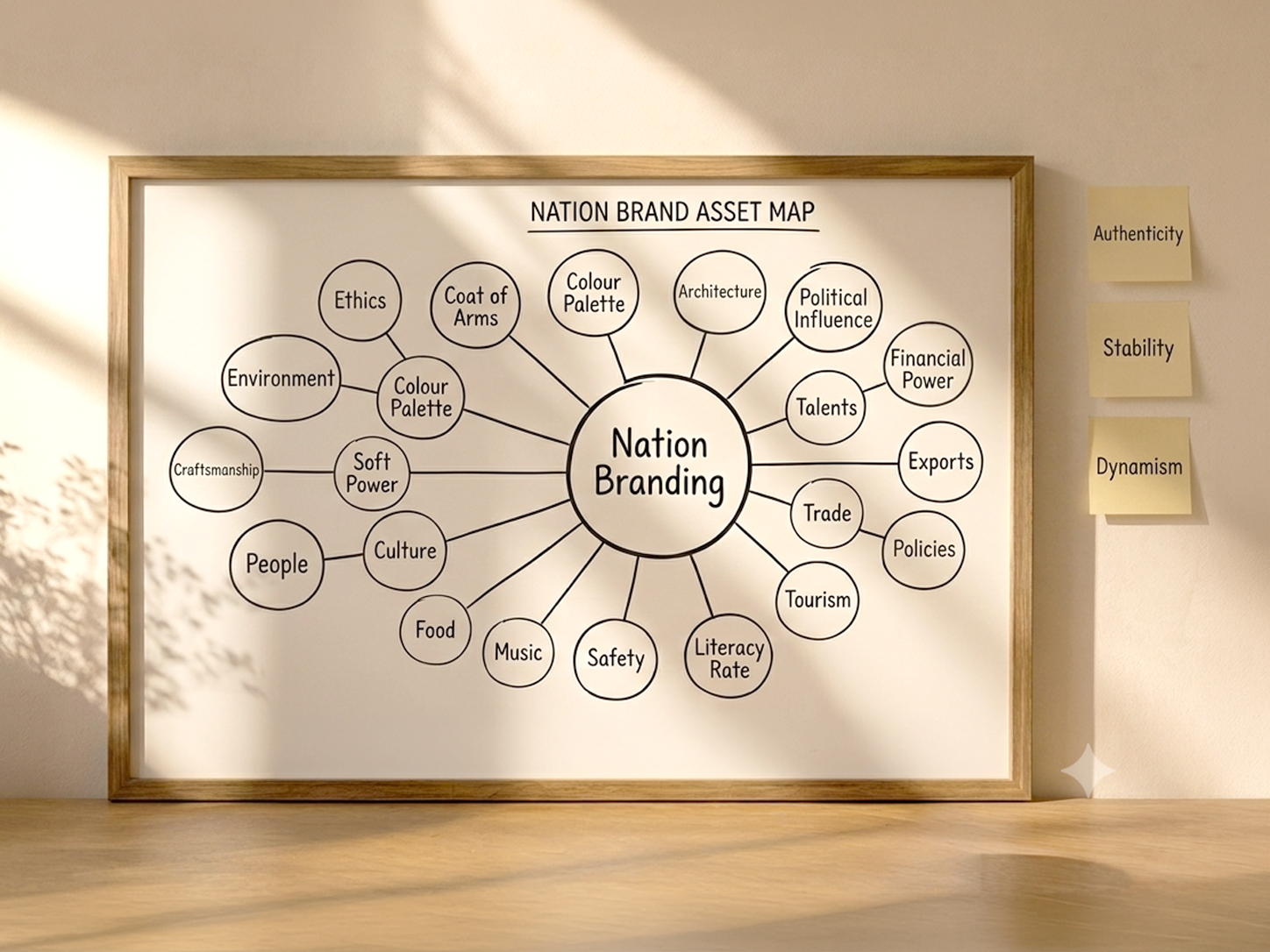
The Term Is Newer Than You Think
The phrase "nation branding" was coined in 1996 by British consultant Simon Anholt. But the practice, the deliberate shaping of how a country is perceived by the world, is as old as diplomacy itself.
What changed in the 1990s was the explicit borrowing of corporate marketing frameworks. Countries began thinking about competitive positioning, target audiences, and brand architecture. They hired consultancies. They commissioned logos. Some of them wrote taglines that are still mocked today.
Anholt himself later became one of the sharpest critics of this approach. His central position, which has proven correct: nation branding cannot be achieved with logos and slogans. It is a combination of policy and communications. Governments can begin to influence reputation for the good of their citizens, but they cannot control the narrative.
That last statement is worth sitting with. It contains an honest admission that most brand work at any scale resists making. I recently had a chance to engage with policy makers across sectors and countries. Regardless of their background or the party they represented, they agreed unanimously: control is largely an illusion. Influence is available. Control is not.
Three Countries That Built Something Real
South Korea: The Wave Wasn't an Accident
Of all the country branding stories worth studying, South Korea's is the most deliberate and the most instructive.
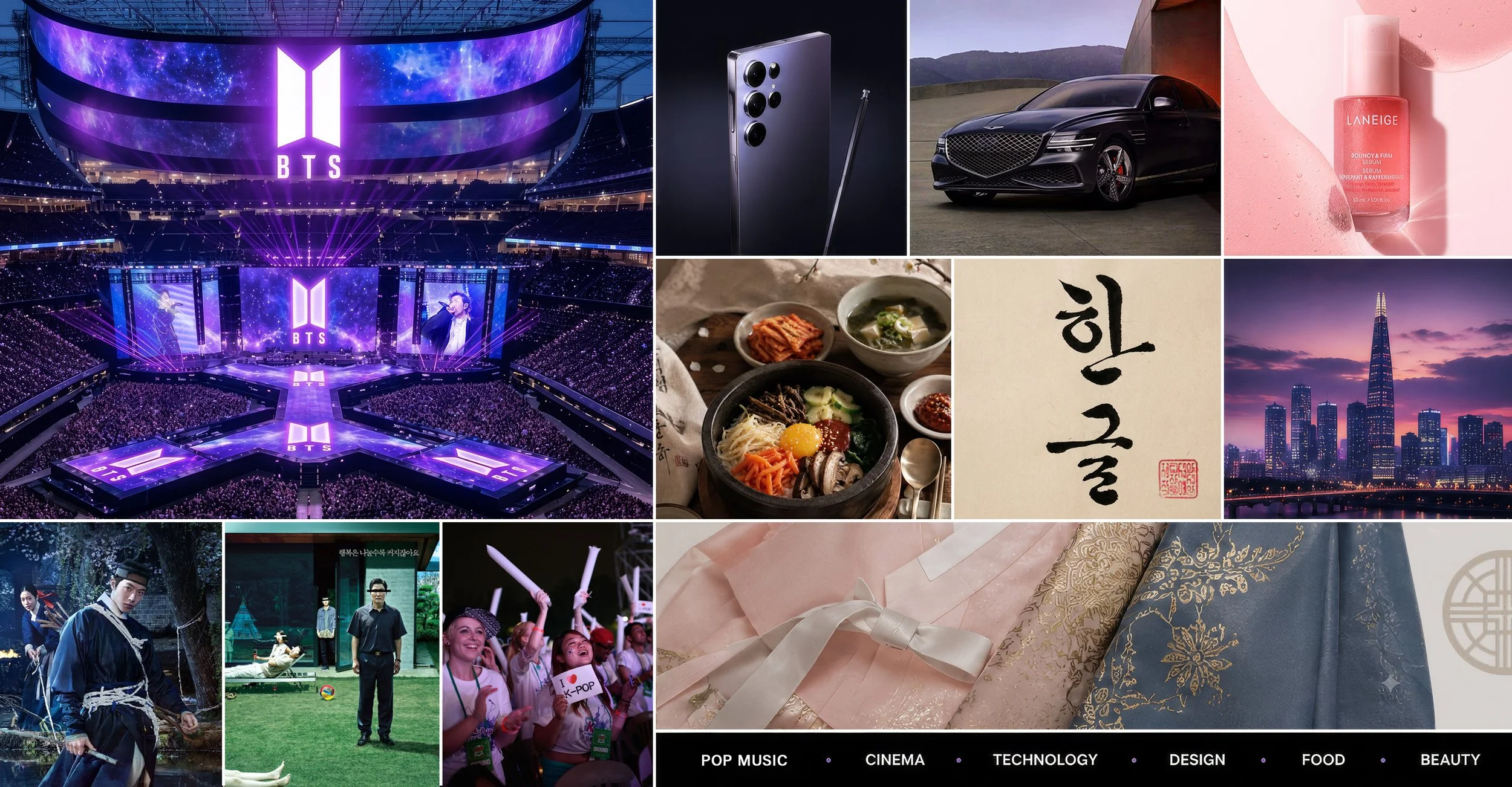
What the world experiences as K-pop, K-drama, Korean skincare, Korean cuisine — the sprawling, organic-feeling global phenomenon known as Hallyu, or the Korean Wave — was, at its foundation, a state-orchestrated strategy. As early as 1998, President Kim Dae-jung launched the Hallyu Industry Support Development Plan, with the explicit goal of increasing the value of South Korea's cultural industry. The government eliminated censorship in the cultural sector, invested heavily in digital infrastructure following the 1997 financial crisis, and systematically embedded cultural export into official diplomatic agendas.
This is what intentional looks like at scale. The King Sejong Institutes expanded internationally to teach the Korean language. The Global Hansik campaign promoted Korean cuisine abroad. BTS was dispatched to the United Nations General Assembly as official envoys. None of this was accidental. The entertainment conglomerates and the foreign policy apparatus were operating from the same brief.
The results are measurable. In 2023, South Korea's cultural exports exceeded USD 12.4 billion. According to Brand Finance's 2024 Global Soft Power Index, the country rose from 21st to 15th in global rankings — a leap attributed substantially to its digital cultural diplomacy. By 2020, it ranked second in Monocle's global soft power survey.
But here is the nuance that gets missed in most tellings of this story: the Korean Wave worked because the culture was real. The government amplified something that had genuine creative depth, genuine talent, and genuine craft. The strategy created conditions and opened channels. The art did the rest. No amount of institutional support would have made the world love mediocre content.
This is the lesson that transfers directly to any brand strategy engagement. You can build the amplification infrastructure, but you cannot manufacture what people actually respond to.
Estonia: One Decisive Bet, Built From the Ground Up
Estonia regained independence from the Soviet Union in 1991 as a small country at the edge of Europe. It had no established brand equity, no inherited associations to leverage. What it had was a clean slate and the willingness to make a single, decisive strategic choice.
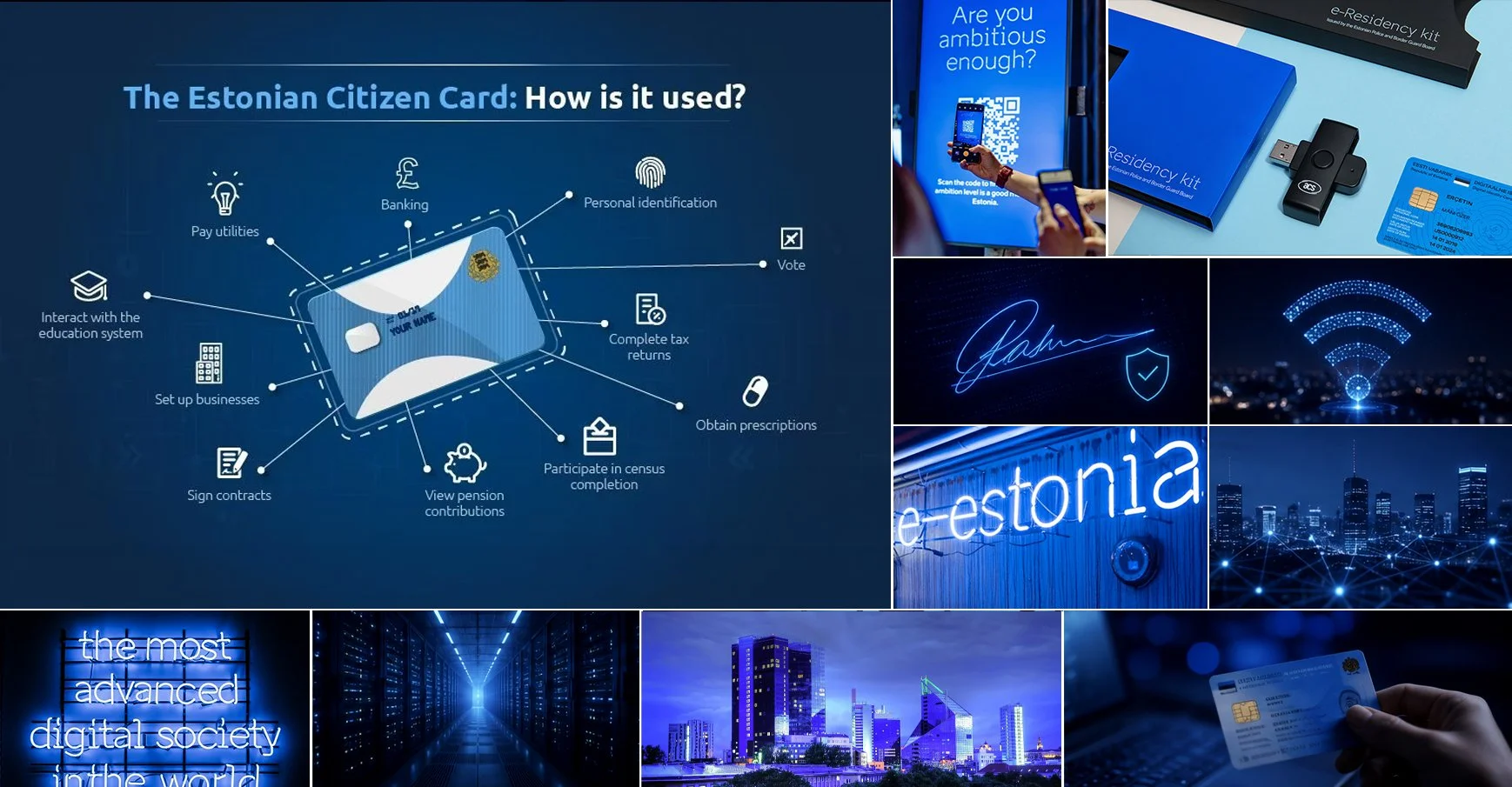
The country chose to become digital. Not as a positioning exercise — as a policy and infrastructure commitment. The e-Estonia program built a digital-first government architecture: 99% of public services available online, from tax filing to voting to prescriptions. The country became the first e-State in the world.
The brand identity followed the substance. Estonia did not run a "Digital Nation" campaign and then figure out the delivery. It built the thing, and the story travelled on its own credibility. Today it ranks first in unicorns per capita in Europe. Tallinn was named the most intelligent community in 2020. The brand is the country. The country is the brand.
What Estonia demonstrates is the power of a single clear commitment, fully executed. Most organizations — countries and companies alike — struggle with this because it requires saying no to everything that does not serve the core idea. Estonia said: this is what we are. Then it spent two decades making that true.
Bhutan: When Philosophy Becomes Brand
Bhutan's story is really two stories running in parallel—and the tension between them is the lesson.
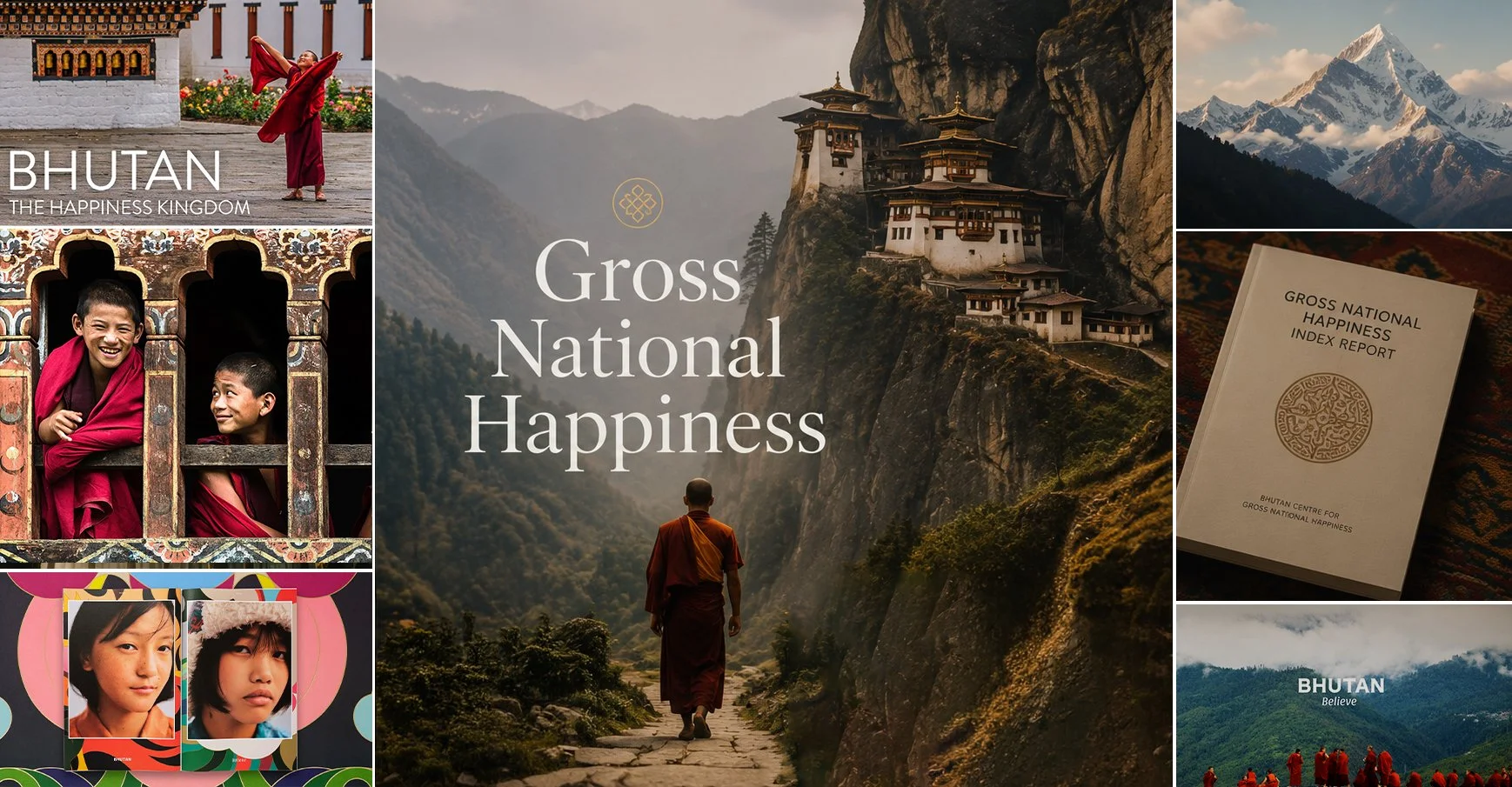
In the late 1970s, the Fourth King, Jigme Singye Wangchuck, remarked that "Gross National Happiness is more important than Gross National Product." It wasn't a slogan or a branding exercise. It was simply an expression of Bhutan's Buddhist worldview.
Yet that single idea became one of the world's most distinctive nation brands.
Gross National Happiness spread through academia, was adopted by the United Nations as a development framework in 2011, influenced policy thinking across countries, including Canada, South Korea, Thailand, and the UAE, and made a small, landlocked Himalayan kingdom of fewer than 800,000 people globally recognizable for something far more meaningful than tourism. No consultancy produced that outcome. The substance did.
Only later did formal branding follow.
Over the years, Bhutan engaged firms including McKinsey, Ogilvy, FutureBrand, and, most recently, MMBP & Associates to help strengthen tourism, exports, and national positioning. The 2022 rebrand centred on the idea of Believe, combining traditional Bhutanese symbolism with a modern identity designed to speak to two audiences at once: attracting international visitors while inspiring young Bhutanese to build their future at home.
It was thoughtful work with clear commercial objectives. But here's the fascinating part. Bhutan's greatest brand asset wasn't created by an agency. It was a governing philosophy that the world chose to believe in.
"Gross National Happiness" became an idea people remembered. "Believe" became a campaign people experienced.
Both have value. But only one became enduring brand equity. That's the difference between creating a visual identity and creating meaning.
The Broadcast Era Is Over
For much of the last century, branding followed a simple model. Organizations crafted the message. Agencies refined it. The media distributed it. The audience listened.
That model no longer exists.
Today, every citizen, customer, employee, creator, and visitor participates in building—or dismantling—a brand in real time.
Go back to the World Cup.
The moments people remember aren't the official tourism campaigns or sponsor advertisements. They're the videos of Mexican fans celebrating with Korean supporters. Japanese fans cleaning the stadium after the match. A player helping an opponent back onto their feet. Local communities welcoming strangers.
None of these moments was scripted. Yet they communicate more about a country's character than any advertising campaign ever could. The same is true in business.
The strongest brands are increasingly built through lived experiences that people choose to share—not messages organizations choose to publish.
And that cuts both ways. One genuine act of kindness can strengthen years of brand building. One authentic failure can unravel it overnight. The brand battlefield is no longer just about what you do. It is also about defending the integrity of what is said about you.
The New Role of Brand Leadership
This changes the role of branding entirely. The goal is no longer to control the narrative. The goal is to create something worth talking about.
Sweden understood this beautifully with its "Call a Swede" initiative, where ordinary citizens answered phone calls from people around the world with no scripts or PR training. The campaign worked precisely because it wasn't polished. It was human.
That's the shift.
People don't trust institutions as much as they trust other people. Whether you're building a nation, a company, or a personal brand, your greatest advocates are rarely your marketing team. They're the people who genuinely believe in what you've built.
Brand leadership today is less about managing messages and more about creating the conditions where authentic stories naturally emerge.
The Principle That Holds at Every Scale
The most underexamined frontier in nation branding is the relationship between a country's internal brand — how its own citizens understand and feel about their national identity — and its external projection. The two have to be reasonably aligned, or the external brand eventually collapses under the weight of its own contradiction.
Citizens are not just brand ambassadors. They are brand auditors. Every day, through social media, through conversation, through the content they create and share, they are fact-checking the official narrative against their own lived experience. When those two things match, you have brand equity that is genuinely hard to displace. When they diverge, you have a gap that no communications strategy can close.
Sitting here in Toronto, watching this tournament unfold on home soil — watching Canada navigate a moment on the world stage it has never occupied before, watching cultures that have never shared a neighbourhood suddenly sharing one — I keep coming back to the same thought.
The best brands, at every scale, are not the most beautifully packaged. They are the most honestly built.
Build the thing. Then tell the story.